The little boys talk about keeping it real
Then take all drugs so they don’t have to feel
A thing
And I don’t suppose you have a clue
What it’s like to be me, what it’s like to be you
Just sing
Dead head
Dead head
The little boys sing about their possessions
This is the total of our progression
Why should I care?
If I had your friends then I think I’d ask them
Where were you hiding when I was no one?
Is that unfair?
Dead Head
Dead Head
The land-line never rings like
A land mine the news it brings is bad, so bad
A bad time never brings the
Money or the diamond rings it’s sad, so sad
I’m deep in a world I don’t understand
And I need you to hold my hand
To make me feel I’m not alone
And be the one that I call home
I fight temptation with addiction
I find elation an affliction
Bitter stomach, acid heart
Contamination off the chart
Bitter stomach, acid heart
I feel the seams are coming apart
I’m only short of breath in the morning
I’m only scared of death as it’s dawning
I’m only short of breath in the morning
I’m only scared of death as it’s dawning
Always further, always deeper
Always dirtier, always bleaker
I feel shame, I feel shame
And yet God knows I’ll do it again
I feel shame, I am to blame
Nothing is nothing but there’s something in pain
Bring the light
Be the light
I wanna shine like the city at night
Yeah your heart is a drug, little kiss, little hug
And I enter the void
Still I drink from the cup, though you mess me right up
Though you leave me destroyed
I love eyes that don’t see, that don’t recognise me
I am background noise
Got no presence or place, not in time or in space
Not for girls, not for boys
And I live with doubt, that you might find me out
Like you know I exist
I can never forgive, how I need you to live
Like the pulse in my wrist
Like ground where I fall, you will never recall
I will never dare tell
Of the things I could do, yeah if only you knew
How I’m under your spell
The invisible man, I do all that I can
But I’ll never be seen
The invisible man, doesn’t feature in plans
That have never quite been
[I don’t want to be inappropriate
The look on you face is the smile of a robot]
If the hairs on your head are numbered
Then so are the beats of your heart
And if I have a regret about anything
I’d like to go back to the start
I want to wake and feel ok
If that’s alright for just one day
I want to wake up with a smile
And feel ok for just a while
On wings made of paper
I flutter into the maelstrom
A delicate shadow removes all my pigment
And I’m gone
A wing-span a life-span
Too fragile for some hands to touch
As nature selects what becomes
Of the insect you crushed?
As if I could just choose
The better of these moods
As if I could just know
The butterfly, the volcano
One day the ground will move
Deafening sound to the core
The air fills with heat as we’re
Losing our feet on the floor
As if I could just choose
The better of these moods
As if I could just know
The butterfly, the volcano
You join the long line of those who’ve let me down
I was wrong to suppose you’d come around
I would rather go back to the dark house
Then they will know what came from their mouths
Those cuts and tears, those words will haunt them all
We’ll see who cares, who’s at the funeral
And so I hide out of the sunshine
It’s all inside the in and out of my mind
Can’t take the flow bright, noise, it’s too loud
And so I’ll go back to the dark house
God knows I’ve tried
To live outside
God knows I’ve run
Into the sun
The thoughts return
Too much light burns
It sometimes helps
To know yourself
Only by the light of the past can we see the future
Only by the shadow cast can we discern the way
Only in the darkness can our eyes become accustomed
Enter hibernation / Only when we’re ready to emerge again some day
Everyone In Your Eyes
I can’t hide the facts or make them change
Eyes upon ground we still feel rain
We can’t pretend it isn’t crashing down
In every single second I’m the same
Everyone in your eyes can do no wrong
Everyone in your eyes like God’s own son
I can’t see the past it’s out of range
Hands behind our backs we still feel pain
I’m made to feel like this is a surprise
In every single second I’m the same
Everyone in your eyes can do no wrong
All I’ve been is honest but I’m long gone
Everyone in your eyes can do no wrong
Everyone in your eyes like God’s own son
Everyone in your eyes can do no wrong
All I’ve been is honest but I’m long gone
In the movie of my life
You are the central character
I am peripheral
I am ephemeral
But it’s when you get distracted
That I find yourself subtracted
From the formula
Despite how loved you are
When I want to
I say I want you
Don’t let it haunt you
You don’t have to say that you want me too
[She said]
I am the camera obscurist
I am the self-loathing narcissist
I am a local celebrity
I am a global non entity
Just put me in the frame
Make sure you learn my name
And never ever think that
You can bother me again
I am the camera obscurist
The indiginous tourist
I’m a media storm
But I will never perform
I want market penetration
Recognition, saturation
So many things that I feel should be said
How far should I let you all into my head
Can it be true that by playing the part
I am crushing the flower that grows in the heart
This is all I’ve ever wanted / This is all I’ve ever wanted
This is every single thing I’ve ever wanted / This will never be enough
about
"As a reviewer, you are often flooded with material to cast an opinion on, generally by artists you’ve never heard of before, with all too many bordering on the mundane. So when you do get to hear something of real merit, it can be difficult not to over eulogize, therefore I have tried to exercise a degree of caution here, because frankly I found this album to be inspiring.
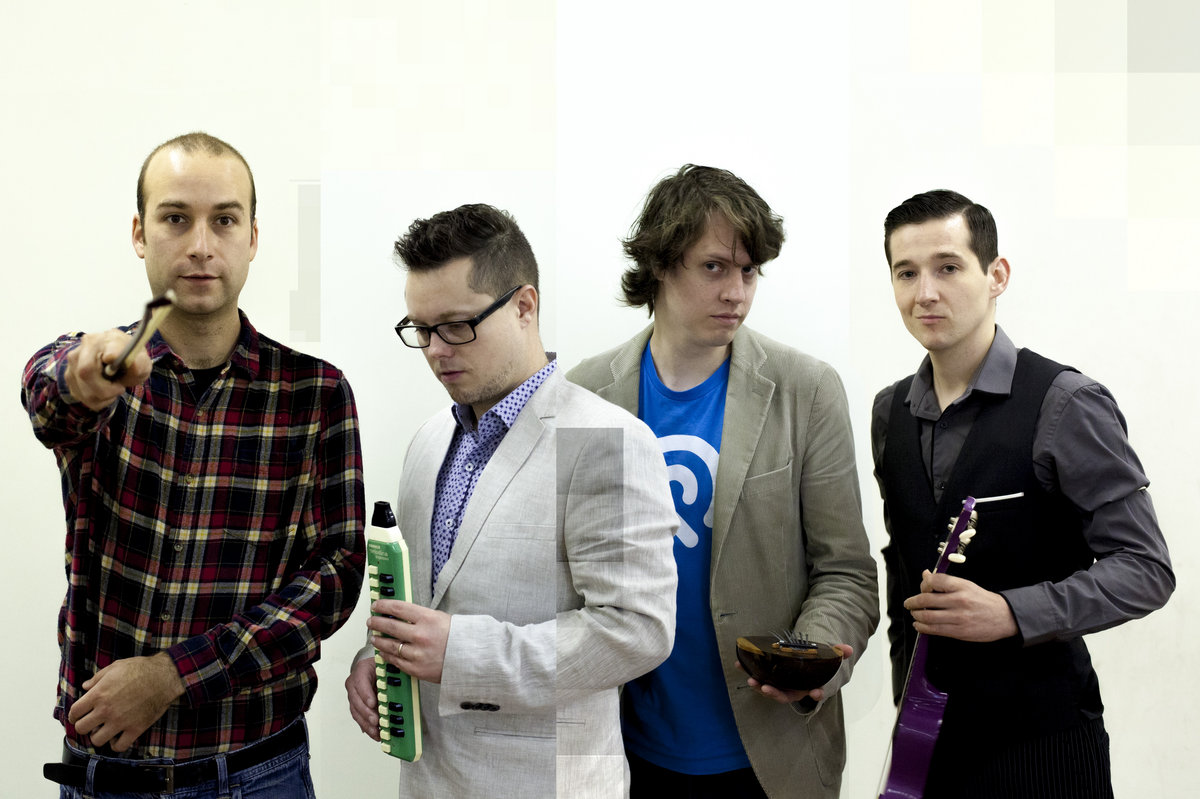
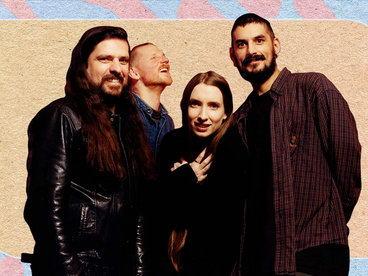
Kobayashi are “four young men from the grimy London suburb of Croydon” (their words, not mine) who have been gigging together for three years and this is their debut album, which has taken a year to spawn and they are self-releasing very soon via iTunes. They crystallize well as a unit and it is evident that their engagement has been a happy one. The arrangements are often complex, but the instrumentation remains cohesive, yet individually discernible. Top that with some crisp production and an enticing package this certainly is. They have drawn on a spectrum of influences but none so much as to remove their own identity. If you can imagine Gomez in an incongruous spar with Muse then maybe you’re getting close to what is on offer here.
The album opens with Dead Head, something of a departure from the rest of the material, with a funked up bass trip that clearly has a Flea persuasion. Throughout the album, James Rampton’s bass playing is omnipresent, either cradling the gentler melodies or forcing through the more aggressive passages. Many of the songs have step-change movements and it’s here that the band’s instrumental prowess is best illustrated. The hub of much of the material though is Matt Searles’ vocals, which possess genuine passion, coupled with an ability to write not only intricate music but also some compelling lyrics.
The Beats Of Your Heart comes on like Tom Waits (a style also evident on Camera Obscurist) and has a bluesy feel to it before being plummeted into a chasm of corkscrewing sound, punctuated by spasmodic drumbeats. Then there’s Bipolarity, one of the stand out tracks, “On wings made of paper I flutter the maelstrom, a delicate shadow removes all the pigment and I’m gone”; Searles’ quivering vocals deliver true feeling and then, as before, he is shunted sideways to make way for a landscaping bass-driven finale where the Muse leanings are most prevalent. Edgard Varese, the French composer, coined the expression music is organised sound and that somehow seems a fitting embellishment for Minus.
My Desire is Bowiesque pantomime, “it’s a lava pool of mayhem with a view of all the pink gems and now the petrified insomniac with fears inside that he cannot turn back”, once again delivered with real panache and then the closing Camera Obscurist, a reflective and eerie number which evolves into a Stooges stampede before collapsing into a lost and lonesome strumming guitar into the fade, leaving the listener numb.
Without a doubt, this is one of the best albums I’ve had the pleasure to listen to in 2009. The band defies close classification and that, quite obtusely, may be their downfall. The industry is geared up for fodder and historical reproduction and, without the big wheels behind Kobayashi, they will struggle to gain attention. In a damp squib of a year for music, that would be a disgrace – “you join the long line of those who’ve let me down, I was wrong to suppose you’d come around”." God Is In The TV
"To dub Croydon quartet Kobayashi a ‘progressive rock’ band may be both slightly misleading and a touch unjust, eschewing as they do almost all of the genre’s traditional hallmarks (no pan pipes or post-helium guzzling vocals here,) but putting aside a number of the term’s most decadent connotations the material displayed on debut album ‘Minus’ is certainly progressive in the purest sense of the word, neatly repulsing attempts to consign them to a handy generic pigeonhole with a refreshing display of innovation and musical exploration.
Over eleven varied tracks, Kobayashi call to mind a host of artists and ranges of sound, from trance to stoner, Nine Inch Nails to Tool and Bowie, while carving out a sound that is altogether their own. ‘Dead Head’ opens the album in a squall of guitar and electronics, underpinned by funky, growling bass, while the creeping dynamics of ‘The Invisible Man’ and ‘The Dark House’ show a command of dark, brooding atmospherics; at first listen, one truly has little idea of what lurks around the corner. Take the intriguing juxtaposition of ‘Centre Yourself’ and ‘Everyone In Your Eyes’ as an example... the former a desolate, piano led lament, segueing unexpectedly into one of the most forthright rock tracks on the album, reminiscent of ‘Origin of Symmetry’ era Muse fronted by an aggrieved and gravel throated new vocalist.
Stitched together by snippets of electronic ambience and eccentric sampling, ‘Minus’ comes across as an organic and decidedly experimental work, brought together by a shared musical intelligence that speaks volumes of the band’s four years together thus far. Most of all, this needs to be heard, it’s imperfections and rough edges simply adding to the impression of a group of individuals in thrall to their rampant creativity and enthusiasm, great to see and hear. This is one hell of a debut; cast your mind back to the aforementioned Devon megastars in their formative years, and it must be said that Kobayashi are more than a match for their exploratory efforts. The future, for this lot, is unwritten. 8/10" Rockpulse
credits
released October 10, 2009
All tracks written, produced and performed by Kobayashi.
Engineered by Gareth Cox at Ambushed Studios.
Cello on Bipolarity by Alice White,
Violin on Bipolarity by Ed Smith.
Not strange as in weird (except, maybe, for guitarist Alan)
but strange as in hard-to-define. Linkin Park, Basement Jaxx, Roxy Music, Queen, James Brown, Tom Waits, The Stooges, Gomez, Bowie and Muse are just some of the artists we’ve been compared to. We don’t try to sound like any of them....more
The fourth LP from Italy’s Francesca Morello is full of dark-hued, industrial-edged rock songs, delivered with a sneer. Bandcamp New & Notable Sep 13, 2021
The Barcelona duo inject coldwave with industrial grit and ghostly elegance, with Andrea P. Latorre’s vocals an undeniable highlight. Bandcamp New & Notable Feb 27, 2020